
Brick Pointing, Repointing & Masonry Repair in NYC
Stair-step cracks, crumbling mortar joints, rust stains bleeding from above your windows — your brick facade is telling you it needs attention. Tekno Construction repoints failed joints, replaces damaged brick, swaps rusted steel lintels and restores stone on New York's pre-war buildings — and we handle the whole process with the city: permits, filings, inspections.
Free facade assessment: (718) 772-8498 — send us photos of the cracks or staining and we'll tell you what you're looking at and what it takes to fix it. Every inquiry gets a response within 24 hours.
Why pre-war brick fails
Most of New York's brick housing stock is 80–100 years old. Those walls were built with soft lime-based mortar that was meant to be sacrificial — the mortar weathers so the brick doesn't. After decades of freeze-thaw cycles, the joints erode, open up and let water into the wall. Once water is inside, everything accelerates: brick faces pop off (spalling), steel lintels rust and expand, and interior walls start showing damp patches that no amount of waterproofing paint will cure.
The fix is not cosmetic caulk or a smear of cement over the joints. It's proper masonry restoration — done with mortar that matches the original in composition, color and joint profile.
The warning signs to look for
- Stair-step cracks — diagonal cracks following the mortar joints in a staircase pattern. They signal movement or a failing lintel, not just old mortar.
- Rust jacking — horizontal cracks and lifted brick directly above windows and doors. The steel lintel behind the wall is rusting, and rust expands with enormous force, jacking the masonry apart.
- Rust staining — orange streaks running down from window heads. The lintel is corroding even if the wall hasn't cracked yet.
- Crumbling or recessed joints — mortar you can rake out with a key. The wall is drinking water at every rain.
- Spalled brick — faces flaking or popping off, exposing the softer core underneath.
- White staining (efflorescence) — salts carried out by water moving through the wall. It's a moisture symptom, not a cleaning problem.
- Bulging or displaced sections — the most serious sign. Call us before it becomes a sidewalk-shed emergency.
Caught early, most of these are contained, affordable repairs. Ignored, they become full rebuilds — or facade violations.
What we do
- Brick pointing & repointing — grinding out failed joints to sound depth and repointing with mortar matched to the original in strength, color and profile. Hard modern cement on soft old brick destroys the brick; our masons know the difference.
- Brick replacement — cracked, spalled or missing brick cut out and replaced with color- and size-matched units, toothed into the surrounding coursework.
- Steel lintel replacement — the wall above the opening is shored, the rusted lintel removed, a new galvanized lintel set with proper flashing and end bearing, and the brickwork rebuilt. This is the single most common structural item on NYC facade reports.
- Stone work — brownstone, limestone and cast stone repair: patching, dutchman repairs, sill and coping replacement, and full exterior restoration on landmark-style pre-war detail.
- Chimneys & parapets — rebuilds, repointing and coping repairs, including work driven by Local Law 126 annual parapet inspections.
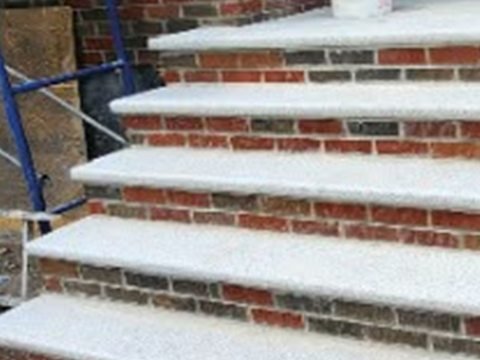
- Steps, stoops & entrances — brick, block and stone, often paired with sidewalk and concrete work in one mobilization.
Masonry and Local Law 11
If your building is over six stories, its facade must be inspected every five years under Local Law 11 (FISP). When the engineer's report classifies conditions as SWARMP or unsafe, the items on that list are almost always masonry: open joints, cracked brick, deteriorated lintels, loose parapets and failing stone.
We perform the repairs that close out those reports — working from your QEWI's findings, coordinating with the engineer, and installing scaffolding and sidewalk sheds where the work requires them. Unsafe conditions run on a city clock, so we prioritize FISP repair work for fast mobilization. One contractor, from shed to sign-off.
Our process
- Free on-site assessment — we inspect the facade, sound the wall, identify the cause (not just the symptom) and photograph every condition.
- Fixed written quote — a clear scope with materials and timeline. No open-ended day rates, no surprises.
- Permits & filings — we handle DOB permits, sidewalk shed filings and any FISP paperwork with the city. You make one call; we do the rest.
- Protection & access — scaffolding, sheds and rigging installed to code; entrances and plantings protected.
- The masonry work — grinding, repointing, brick and lintel replacement with matched materials, kept dust-controlled and clean.
- Inspection & close-out — we see the work through city inspection and engineer sign-off, and hand you photo documentation of everything done.
How pricing works
No two facades fail the same way, so we never guess over the phone — and we never publish flat prices. We visit your building free of charge, assess the wall up close, and hand you a fixed written quote. No obligation, and no revisions after the work starts.
Your price is determined by:
- Scope — square footage of repointing, number of brick to replace, and how many lintels need swapping
- Access — ladder work vs. scaffolding vs. a sidewalk shed changes the setup significantly
- Materials — matched brick, custom mortar blends and stone units vary in cost
- Height & condition — upper-floor work and structurally compromised sections take more care and protection
We respond to every inquiry within 24 hours and can usually assess the same week. Start with the quote form or message us on WhatsApp.
Where we work
From our Yonkers headquarters we run masonry crews across the Bronx, Manhattan, Brooklyn, Queens, Yonkers and Westchester. Pre-war walk-ups in the Bronx and brownstone blocks in Brooklyn are our most common calls — the housing stock there is exactly the age where mortar and lintels give out together.
Frequently asked questions
What causes stair-step cracks in a brick wall?
Movement. The crack follows the mortar joints diagonally because the joints are the weakest path. Common causes are a rusting steel lintel, foundation settlement, or thermal movement in a wall with failed joints. We identify the cause during the free assessment — repointing over a moving crack without fixing the cause just moves the crack.
What is rust jacking?
Steel expands as it rusts — with enough force to lift and crack the masonry sitting on it. It shows up as horizontal cracks and displaced brick above windows and doors, where hidden steel lintels carry the wall. The fix is replacing the lintel, not patching the crack.
How often does brick need repointing?
Good repointing on a pre-war wall typically lasts decades. What shortens its life is water exposure, parapet and coping condition, and whether the original repair used properly matched mortar. If your joints are crumbling or recessed, the wall is due now.
Do you do Local Law 11 (FISP) facade repairs?
Yes. We repair SWARMP and unsafe conditions from your engineer's FISP report — repointing, brick and lintel replacement, parapet and stone repairs — including scaffolding, sidewalk sheds and the city filings. We coordinate directly with your QEWI through sign-off.
How much does brick pointing cost in NYC?
It depends on the square footage of failed joints, access to the wall, and whether brick or lintel replacement is needed — which is why we quote only after seeing the building. The on-site visit is free, the quote is fixed and in writing, and we respond within 24 hours.
Can you match the original brick and mortar on a pre-war building?
Yes. We match brick by color, size and texture, and blend mortar to match the original composition, color and joint profile. Using hard modern cement mortar on soft old brick causes the brick itself to spall, so matching is a structural issue, not just a cosmetic one.
Do masonry repairs need a permit in NYC?
Structural work such as lintel replacement, and any job needing a sidewalk shed or scaffolding, requires DOB permits and filings. We handle all permits, filings and inspections as part of every job — it's never a separate task left to you.
How soon can you start?
We respond to every inquiry within 24 hours and can usually schedule the free assessment the same week. Unsafe facade conditions and active leaks are prioritized for the fastest possible mobilization.
Masons who know New York's walls
15 years, 500+ projects
A decade and a half restoring brick, stone and steel across New York — over 500 completed projects, from single stoops to full facade programs.
Licensed & insured
A fully licensed and insured general contractor. Permits filed under our license, work documented, inspections seen through to sign-off.
24-hour response
Every call, form and WhatsApp message answered within 24 hours — and a free on-site assessment usually scheduled the same week.
Get your free masonry assessment
Whether it's one cracked lintel or a facade full of SWARMP items, the first step is the same: we look at the wall, tell you honestly what it needs, and put a fixed price on it in writing.
Prefer to talk? Call (718) 772-8498, message us on WhatsApp, or email info@teknoconstruction.com. You'll hear back within 24 hours.