
Waterproofing contractors in NYC & Yonkers
Water in the basement, stains spreading across a ceiling, brick that never quite dries — every month a leak goes unfixed, it gets more expensive. We trace the water to its actual source, then stop it with the right basement, facade or roof waterproofing system — permits, filings and inspections handled where the job needs them.
Have an active leak? Call (718) 772-8498 — we respond to every inquiry within 24 hours, and the on-site assessment is free.
Why NYC and Yonkers buildings leak
Most of the leaks we're called for come down to a short list of causes, and almost none of them start where the stain shows up:
- Grading and drainage — soil pitched toward the foundation, clogged or disconnected leaders, and paved-over yards push stormwater straight against basement walls. On Yonkers hillsides, uphill runoff makes it worse.
- Pointing failure — mortar joints on pre-war brick wear out decades before the brick does. Once joints go soft or crack, wind-driven rain soaks directly into the wall and shows up inside as damp plaster two floors below.
- Parapet cracks — parapets take weather from both faces and freeze-thaw cycles crack them first. Open coping joints and cracked parapet walls are among the most common sources of "roof leaks" we diagnose — which is exactly why the city now requires annual Local Law 126 parapet inspections.
- Flat-roof ponding — water that sits on a flat roof for days after rain works into every seam, blister and flashing lap it can find. Ponding ages a membrane far faster than weather alone.
- Failed flashing and sealants — around bulkheads, skylights, drains, lintels and window heads, sealant is often the only thing keeping water out, and it has a service life.
What we waterproof
- Basement waterproofing — exterior excavation and foundation sealing, drainage correction, interior water-management systems, and below-grade work for Brooklyn's garden-level brownstone apartments and flood-prone blocks.
- Facade waterproofing — repointing-plus-sealing scopes, elastomeric coatings and clear penetrating sealers for brick and masonry walls, done together with our masonry and brickwork crews so the repair and the seal happen as one job.
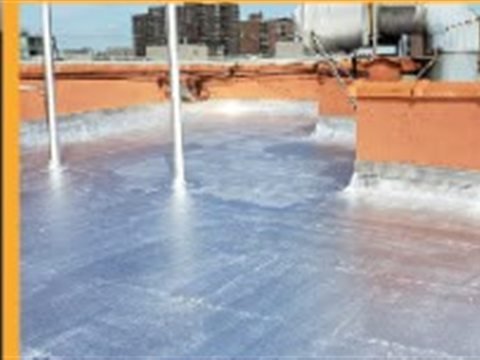
- Roof and parapet waterproofing — flat-roof coatings and membrane repairs, flashing replacement, coping and parapet repairs that stop top-down leaks at the source, coordinated with our roofing team.
- Balconies and terraces — waterproof membranes under tile and pavers, where a pinhole failure ruins the ceiling of the apartment below.
Interior vs exterior: choosing the right approach
For basements, this is the decision that matters most — and the one most often sold wrong.
Exterior waterproofing stops water before it ever touches the foundation: excavate, repair the wall, apply a waterproof membrane, and rebuild the drainage path away from the building. It's the most complete fix, but it needs access — a real consideration on zero-lot-line NYC properties where the neighbor's wall is inches away.
Interior systems accept that some water reaches the wall and manage it — interior drainage, sump equipment, and vapor-appropriate wall treatments. On tight city lots, or where the source is groundwater pressure rather than surface runoff, an interior system is often the practical, durable answer.
Many buildings need a mix: regrade and fix the leaders outside, manage the remaining moisture inside. We'll show you the options for your building — not a one-size package.
We find the source before we sell a fix
Water travels. It enters at a cracked parapet, runs along a joist, and drips through a bedroom ceiling twenty feet from the entry point. A contractor who quotes a fix for the ceiling is quoting you the wrong repair.
So our first visit is a diagnosis, not a sales call. We inspect the full path water can take — roof surface, parapet and coping, facade joints, window heads, grade and drainage — and trace the symptom back to the entry point. Then we show you what we found, in plain language, and quote only what's needed. Not every leak needs a full system, and we'll tell you when it doesn't.
Our process, step by step
- Free on-site visit — we inspect inside and out, trace the moisture, and document what we find with photos.
- Source diagnosis — we show you where the water actually enters and explain the repair options, from targeted fix to full system.
- Fixed written quote — scope, system, materials and timeline in writing. The price we quote is the price you pay.
- Permits, filings and inspections — where the work requires them (excavation, sidewalk sheds and scaffolding, facade repairs on larger buildings), we handle the whole process with the city.
- The work — protection and prep, masonry or substrate repairs first, then the waterproofing system installed to the manufacturer's specification.
- Verification — where practical we water-test the repair, and you get documentation of what was done.
How pricing works
No two leaks price the same, so we never guess over the phone. We visit your property free of charge, find the source, and hand you a fixed written quote — no obligation, and no surprises once the work starts.
Your price is determined by:
- Scope — a targeted parapet and flashing repair is a very different job from a full exterior foundation excavation
- Access — below-grade depth, lot lines, and whether scaffolding or roof access is needed
- Materials and system — membrane, coating, drainage components and the masonry repairs that come first
- Condition of the substrate — waterproofing only lasts when the wall or roof under it is sound
We respond to every inquiry within 24 hours, and you can request your quote online any time.
One team for the whole building envelope
Waterproofing rarely stands alone. Facade leaks usually need repointing or brick repair before any coating goes on. Roof leaks often turn out to be parapet or coping failures covered by your annual parapet inspection obligations. And if your building is 6 stories or taller, facade waterproofing is smartest to schedule alongside your Local Law 11 / FISP cycle, so one scaffold mobilization covers both. Because we self-perform masonry, roofing and exterior restoration, you get one contractor responsible for the whole fix — not three trades pointing at each other.
Serving every borough from Yonkers
From our headquarters at 137 Homewood Ave in Yonkers, our crews handle waterproofing across the Bronx, Brooklyn, Manhattan, Queens and Westchester County — from brownstone cellars to pre-war parapets.
Frequently asked questions
How do you find where a leak is actually coming from?
We inspect the full path water can travel — roof, parapet, facade, windows, grade and drainage — and trace the stain back to its entry point before recommending anything. Water often enters far from where it shows up, so we never quote a repair until we can show you the source.
Do I need interior or exterior basement waterproofing?
Exterior waterproofing stops water before it touches the foundation and is the most complete fix, but it requires excavation and access. Interior systems manage water that gets in and are often the practical choice on tight NYC lots or where groundwater pressure is the cause. We recommend based on your foundation, lot and source of water after a free on-site visit.
My brick wall leaks in wind-driven rain. Is that a roof problem or a wall problem?
On older brick buildings it is usually the wall: failed pointing, cracked parapets and open coping joints let wind-driven rain straight into the masonry. We check the roof edge, parapet and mortar joints together, then repair the masonry and seal the facade as one scope so the leak does not come back.
How much does waterproofing cost in NYC?
Every building is different, so we price after a free on-site visit. Your fixed written quote depends on the source of the leak, the system needed, access and materials. We respond to every inquiry within 24 hours, and the assessment costs nothing.
Do I need permits for waterproofing work?
Some waterproofing work does require city permits and filings — excavation, sidewalk sheds and scaffolding, and facade repairs on larger buildings. When your project needs them, we handle the permits, filings and inspections as part of the job.
Can waterproofing be combined with Local Law 11 or parapet inspection work?
Yes. If your building is in a FISP cycle or subject to the annual Local Law 126 parapet inspection, we combine the required repairs with facade and parapet waterproofing under one mobilization, so the access setup is paid for once instead of twice.
Does waterproofing paint fix a wet basement?
Not on its own. Coatings applied over active water intrusion trap moisture in the wall and usually peel within a season. The water has to be stopped or managed first — through drainage, exterior sealing or an interior system — and coatings come last, if at all.
How soon can you come out?
We respond to every inquiry within 24 hours and can usually schedule your free on-site visit within days. Active leaks get priority scheduling.
Why building owners choose Tekno
15 years, 500+ projects
Fifteen years of masonry, roofing and waterproofing across NYC and Westchester — we have seen how these buildings fail, and how the fix holds.
Licensed & insured
A licensed and insured general contractor that handles the whole process with the city — permits, filings and inspections included.
24-hour response
Every inquiry gets a response within 24 hours, a free on-site visit, and a fixed written quote — never a vague estimate.
Stop the leak at its source
The longer water runs, the more it costs — in plaster, in brick, and eventually in structure. One call and we'll find where it's getting in, show you the evidence, and put the fix in writing.
Get your free waterproofing assessment
Prefer to talk it through? Call (718) 772-8498, message us on WhatsApp, or contact us online — we reply within 24 hours.